trivikram
You are hereAbout

About

త్రివిక్రమ్トリビクラム

Teja Trivikram Mallarapu, designing for orientation.

Architecture taught me that every square foot has a purpose. Product design taught me that every pixel has a purpose.

I studied architecture at SPA New Delhi, moved into visual and brand design, and then into product design. Each step added a way of seeing: space and orientation, perception and communication, journeys and systems.

At GeoIQ (now part of Lenskart) I design RetailIQ, a location-intelligence platform retail teams use to decide where to open their next store. The work is dense: maps, reports, comparisons, permissions, enterprise workflows. Most of my job is making dense data and business rules understandable without overwhelming the people who use them.

I’m now doing an MA in Psychology because many of the problems I work on involve how people perceive information, build confidence, hesitate and make decisions. I’m interested in using that practically, not as jargon.
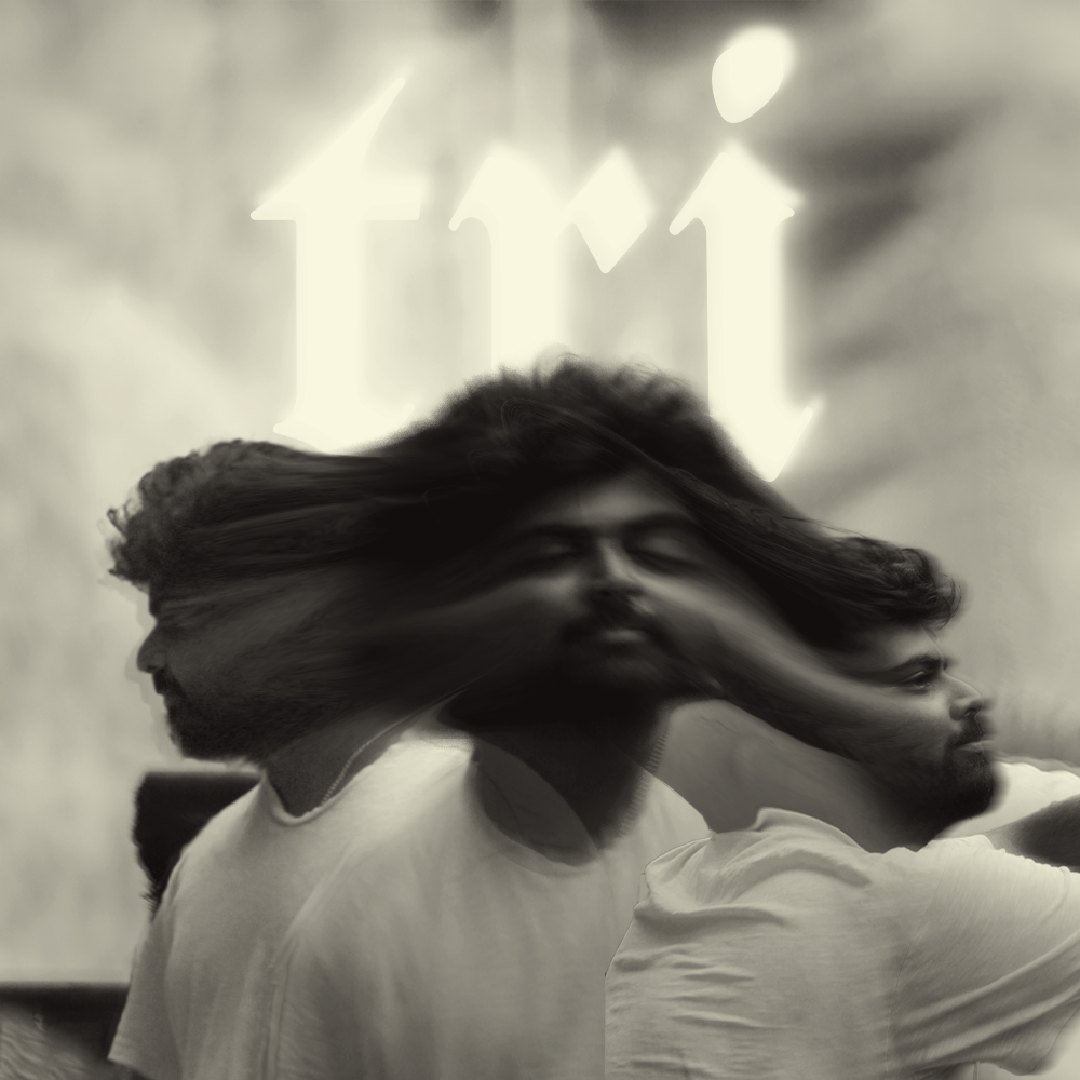
Teja Trivikram, a layered multiple-exposure portrait
01 — Principles · working version

Understand the human. Understand the context. Then structure.

Good design reduces uncertainty: it helps people understand where they are, what they can do and what happens next. These principles came out of my work, and they’re still changing.

Complexity→Design→Human understanding
  1. Design should serve the purpose of the experience, not the ego of the designer. A cultural website can afford expression; a government dashboard needs hierarchy, legibility and trust. The visual language should come from the context.

  2. Design is by the people, for the people and from the people. I try to start from what I observe, not what I assume, and to keep the two apart.

  3. There is no single definition of good design. The right answer depends on the environment, the audience and what is at stake if it goes wrong.

  4. In a building you need to know where you are, where you are going and how to get back. Products are the same. Navigation isn’t a component; it’s part of how people understand the system.Seen in Site Report · Places Pages · RetailIQ Revamp

  5. A mother doesn’t change what her child needs to eat. She changes how it’s served. Design doesn’t change the destination; it changes the journey.Seen in Site Report · Rental Benchmark

  6. Someone pays by UPI and keeps waiting at the counter. The problem isn’t the payment; it’s that nothing tells them it’s done. Good design gives people closure, so they can move on.Seen in AI highlights · Rental Benchmark · Collaboration

  7. A screen is one room in a building. I look at how it connects to the rest, because inconsistency between parts is its own kind of cognitive load.Seen in The RetailIQ journey · enterprise workflows

  8. →GoalThe person gets where they meant to go.
02 — Observing

A café, a restroom and a payment

“Users were confused” is an interpretation. What people did is an observation. I try to write down the second before I believe the first.

  1. 01 · Behaviour

    Three people paused near the corridor, looked around, and asked staff where the restroom was.

  2. 02 · Friction

    There was no wayfinding cue at the point of decision.

  3. 03 · Hypothesis

    The space assumes people will discover the way on their own.

  4. 04 · Need

    People need to know where they are and where to go.

  5. 05 · Opportunity

    A simple, consistent wayfinding system.

03 — Beyond the screen

People don’t experience departments. They experience life events.

The interface is one touchpoint. I try to design with all three layers in view, especially for public services, where friction can mean another office visit, a missed day of work or a benefit someone never receives.

  1. Human goal
  2. Life event
  3. Journey
  4. Services
  5. Touchpoints
  6. Interface
Physical layer

Buildings, roads, signage, public spaces, transport, accessibility.

Service layer

Departments, policies, processes, officials, approvals, service centres.

Digital layer

Websites, apps, dashboards, notifications, payments, documents.

GoalGet a building permit
  1. Understand requirements
  2. Apply
  3. Track
  4. Receive approval
GoalPay the bill
  1. Pay
  2. Receive confirmation
  3. Leave confidently
GoalMake a location decision
  1. Find information
  2. Understand it
  3. Compare
  4. Decide
04 — How I work

A mental model, not a ceremony.

  1. 01Understand
  2. 02Frame
  3. 03Structure
  4. 04Explore
  5. 05Validate
  6. 06Ship
  7. 07Learn

Not rigid stages. Understanding the people and the system runs through all of them, and I loop back whenever the evidence says so.

On AII use Claude, ChatGPT and Cursor to explore interaction models and turn ideas into working prototypes quickly, without waiting on engineering. The person defines the problem and makes the judgment; AI speeds up exploration.

05 — Experience

Where I’ve worked

  1. Dec 2023 — Present
    Product DesignerGeoIQ — a Lenskart company

    RetailIQ platform, enterprise workflows, mobile, website & SEO/GEO systems, AI-assisted design workflows.

  2. Apr — Jul 2023
    Brand & Campaign DesignerPod World (contract)

    Brand and investor-facing communication for startup fundraising.

  3. Apr 2022 — Apr 2023
    Graphic DesignerFlow Realty

    Campaign systems, motion and performance creatives for real-estate projects.

  4. Jan 2023
    Brand DesignerArtharidhi (freelance)

    Identity system for a portfolio-management startup serving HNI clients.

  5. Jan 2020
    Brand & UX DesignerAgro BOOK (freelance)

    Identity and early UX flows for an agricultural services app.

Education

MA, Psychology
IGNOU · 2025 — Present

B. Building Design & Sciences (Architecture)
School of Planning and Architecture, New Delhi · 2015 — 2021

Product
  • Decision support
  • Complex workflows
  • Information architecture
  • Problem framing
Design
  • Interaction design
  • Data visualisation
  • Design systems
  • Enterprise UX
AI & prototyping
  • AI-assisted prototyping
  • Claude
  • ChatGPT
  • Cursor
Tools
  • Figma
  • Framer
Languages
  • English
  • Hindi
  • Telugu
  • Tamil
  • Kannada
06 — Contact

Building something people need to find their way through? Let’s talk.